Why You Should Visit Michigan’s Port Austin for Picturesque Natural Wonders
Port Austin sits at the very tip of Michigan’s Thumb, where farmland ends, and Lake Huron stretches wide and blue. The town feels quiet and relaxed, yet it hides one of the most striking natural landmarks in the Midwest. Travelers come for fresh air, open water, and scenery that feels untouched by time.
This small lakeside community rewards visitors who slow down and explore. Calm beaches, rocky cliffs, and clear water create a setting that feels simple yet memorable. One moment you are walking through town, the next you are paddling toward a rock formation that looks like it belongs in a fantasy film.
Turnip Rock, Michigan’s Most Unusual Natural Landmark
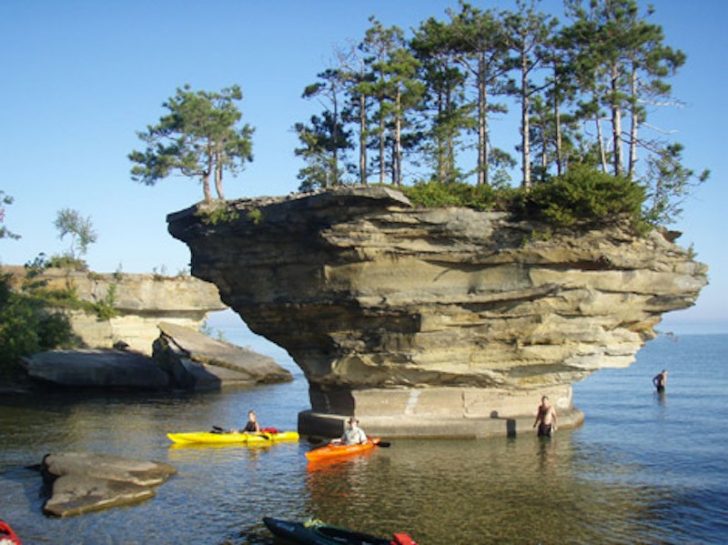
The Explorer / Turnip Rock stands just offshore along the Lake Huron coastline, and it immediately catches the eye with its strange shape.
The rock looks exactly like its name suggests, with a narrow stone stem that supports a wide crown topped with wind-shaped trees. Years of waves and wind carved the limestone into this dramatic formation, leaving a structure that feels both fragile and timeless.
This landmark began forming thousands of years ago when glaciers carved the Great Lakes basin. Slow erosion then sculpted the limestone stack into the shape visitors see today. Many travelers consider it one of Michigan’s most impressive natural sights because nothing else along the shoreline looks quite like it.
The journey to Turnip Rock is part of the adventure. Kayakers launch from Port Austin Harbor and paddle along a rugged stretch of coastline filled with caves, small arches, and jagged rock towers. The water often glows with bright shades of turquoise and green, especially on calm summer mornings.
As paddlers move closer to the rock, the scene becomes quiet and almost surreal. The tall limestone pillar rises from clear water while trees cling to the top like a tiny forest. Most visitors pause for photos and take a few moments to enjoy the view before heading back along the shoreline.
Kayaking Along the Lake Huron Shoreline
Reaching Turnip Rock requires a short journey across open water, which makes kayaking the most popular way to see it. Local outfitters rent kayaks and provide basic instructions for beginners, so even first-time paddlers can make the trip safely. The round trip covers roughly seven miles and usually takes a few hours, depending on the weather and pace.
The route stays close to the shoreline, which adds constant scenery along the way. Limestone cliffs rise from the water and create small pockets where waves carved caves and narrow openings in the rock. Fish often swim beneath the kayaks because the water remains surprisingly clear for a Great Lake.
Broken Rocks appear along the route and add another dramatic scene to the trip. These jagged stone towers stand upright in the water like sharp teeth rising from the lake. Many paddlers stop nearby to rest and take photos before continuing toward the famous rock formation ahead.
Beaches, Parks, and Small Town Charm
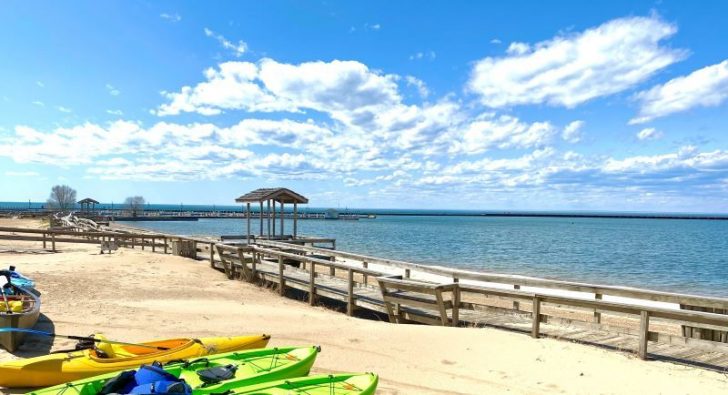
GTN / The surrounding area includes beaches, parks, and outdoor spaces that invite visitors to stay a little longer.
One of the most popular spots is Port Crescent State Park, located just a short drive from downtown.
This state park features several miles of sandy shoreline along Lake Huron. Families often gather here to swim, relax on the beach, or search for fossils among the small stones scattered along the water’s edge. The shallow water and soft sand make it a comfortable place to spend an entire afternoon.
At night, the park becomes even more special, as it is designated as a dark-sky preserve. On clear evenings, the sky fills with stars with little artificial light nearby. Visitors sometimes spot the Milky Way stretching across the horizon or catch a glimpse of the northern lights glowing faintly above the lake.